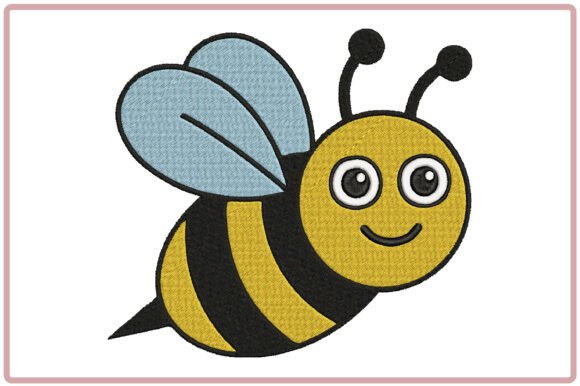
Cute Honey Bee Machine Embroidery Design Review
As a professional embroidery designer who has spent years refining machine embroidery design files for commercial use, I approach every new asset with a critical eye. When evaluating the Cute Honey Bee Machine Embroidery Design, my immediate goal is to determine if this pattern can transition from a cute digital file into a reliable brand asset for small businesses. The product description promises to "bring a buzz of happiness" with a "friendly, smiling bumble bee." For a boutique bakery, a florist, or a handmade craft brand, this specific aesthetic is often exactly what is needed to humanize a logo and connect with customers on an emotional level.
First Impressions: Visual Personality and Brand Fit
The first thing that strikes me about the Cute Honey Bee Machine Embroidery Design is its inherent warmth. In the world of brand identity, a smiling character instantly communicates approachability. Unlike abstract geometric logos that can feel cold or corporate, a friendly bumble bee suggests community, hard work, and sweetness. This makes it an excellent candidate for small business merch where the goal is to build trust and recognition among local customers.
Visually, the design falls into the "handmade" and "playful" categories rather than "premium" or "corporate." This is not a negative; in fact, for Etsy sellers and creative studios, this rustic charm is a selling point. It signals that the product behind the logo was made with care. However, it is crucial to understand that this specific vibe works best for brands that want to appear accessible and cheerful. If you are a high-end luxury fashion house, this might be too whimsical, but for a café apron or a tote bag line, it is perfect.
Real-World Applications for Small Business Merchandise
When I consider how the Cute Honey Bee Machine Embroidery Design performs in actual production, several use cases immediately stand out. The versatility of a bee motif allows it to function as a primary logo or a secondary accent mark depending on the placement.
- Staff Uniforms and Aprons: For a bakery or a flower shop, placing this design on the chest pocket of an apron creates a cohesive team look. It adds a personal touch to apron embroidery that makes staff members feel part of a family rather than just employees.
- Custom Apparel and Caps: The design is well-suited for cap embroidery. A small version on the front of a baseball cap serves as a subtle brand marker. Because the bee is a recognizable shape, even a simplified version maintains brand recognition without overwhelming the wearer.
- Tote Bags and Eco-Friendly Goods: As sustainability becomes a priority for many brands, the bee motif aligns perfectly with eco-conscious messaging. Using this tote bag design on canvas bags reinforces the message of supporting nature while promoting the business.
- Product Packaging Accents: Instead of printing on boxes, adding a sewn-on label with this embroidered patch elevates the perceived value of the item. It transforms a standard gift into a premium, tactile experience.
- Event Merchandise and Gifts: For farmers' markets or local festivals, this design works beautifully on temporary merchandise like koozies or keychains, offering a memorable takeaway for attendees.
Technical Considerations for Production Success
While the concept is strong, the execution depends heavily on technical precision. As a designer reviewing this digital embroidery file, I must advise caution regarding scale and density. The description mentions a "charming pattern," which implies detail. In commercial embroidery, fine details can sometimes get lost if the stitch count is too low or the hoop size is too small.
Stitch Density and Fabric Texture
One of the most common pitfalls with character designs is stitch density. If the bee's stripes or wings are packed too tightly, the fabric may pucker, ruining the smooth finish required for professional finished product presentation. Conversely, if the density is too low, the design may look flimsy. I always recommend testing the design on a scrap piece of the exact fabric intended for production. Textured fabrics like denim or heavy canvas require different stabilizer choices than smooth cotton blends. Using the proper stabilizer is non-negotiable to ensure the bee sits flat and crisp.
Size Limitations and Placement
For cap embroidery or small patches, you must verify that the design remains legible at reduced sizes. A smiling face needs enough pixels—or in this case, stitches—to convey the expression. If the design is scaled down too much for a sleeve detail, the smile might disappear, leaving just a fuzzy blob. Always check the minimum recommended size before committing to a bulk run. Additionally, curved surfaces like caps can distort the image if the digitization does not account for the curvature. A good embroidery file will include adjustments for these shapes, but a test run is essential.
Strategic Branding and Commercial Viability
Incorporating the Cute Honey Bee Machine Embroidery Design into your design assets strategy requires a thoughtful approach to color and consistency. The thread colors chosen will define the mood. Traditional yellow and black are classic, but using pastel yellows or earth tones can modernize the look for a boutique brand. Ensure that the thread colors match your existing brand palette to maintain visual consistency across all custom apparel.
This design has the power to significantly boost customer engagement. People love sharing photos of cute branding on social media. A well-executed embroidered bee on a tote bag or shirt acts as a walking billboard for your business. It enhances the handmade product narrative, suggesting quality and attention to detail. However, remember that embroidery is permanent. Unlike screen printing, you cannot easily fix a mistake. Therefore, creating a printable mockup for client approval before stitching is a vital step in the workflow.
Designer Checklist Before Production
Before you finalize your order or begin stitching, run through this practical checklist to ensure the Cute Honey Bee Machine Embroidery Design meets your business standards:
- Test in Black and White: Print a grayscale version to check contrast and spacing. This reveals if any parts of the bee will blend together when stitched.
- Verify Hoop Size: Confirm that the design fits within your machine's maximum hoop size without requiring awkward re-hooping, which can cause misalignment.
- Check Licensing Terms: Ensure the digital embroidery file includes a commercial license. Many designers sell files for personal use only. You must have the right to use it for small business merch to avoid legal issues.
- Inspect Spacing: Look at the space between the wings and body. If it is too tight, the needle might hit the previous row of stitches, causing breakage.
- Compare with Other Assets: Place the bee next to your current logo or other design assets to ensure it doesn't clash stylistically.
- Test on Real Fabric: Never skip the physical test stitch. Light-colored threads on dark uniforms may require a backing layer to prevent show-through.
Final Verdict on the Bugs Category
Within the broad category of Bugs and general Embroidery trends, the Cute Honey Bee Machine Embroidery Design stands out as a versatile and emotionally resonant choice. It bridges the gap between professional branding and playful creativity. For small business owners looking to add a touch of personality to their uniforms, gifts, and products, this design offers a solid foundation. By paying attention to technical details like stabilizer selection, thread contrast, and sizing, you can transform this charming pattern into a powerful tool for brand recognition. Whether it ends up on a chef's hat, a gardener's apron, or a customer's favorite tote bag, this little bee is ready to bring a buzz of happiness to your business projects.