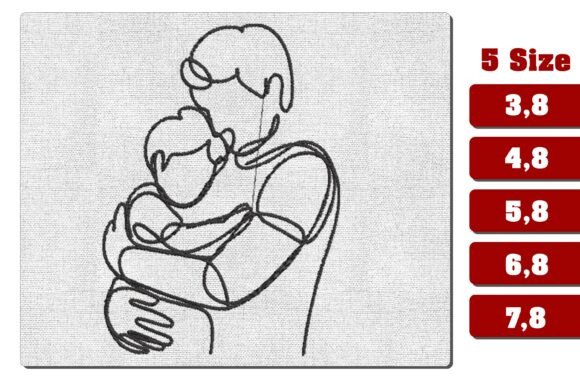
Father and Son Hug Embroidery Line Review
As a designer who has spent years navigating the delicate balance between artistic vision and machine limitations, I approach every new machine embroidery design with a critical eye. When I first opened the file for the Father and Son Hug Embroidery Line, I wasn't just looking at pixels; I was visualizing how this would translate into thread on fabric. This specific design carries an emotional weight that many generic patterns lack. It captures a moment of connection, making it a prime candidate for Father S Day gifts, nursery decor, or heartfelt keepsakes. However, before you download this embroidery file for your next project, let's break down exactly how it performs in real-world scenarios.
First Impressions: Mood and Visual Structure
The immediate appeal of the Father and Son Hug Embroidery Line lies in its silhouette. The outlines are clean, avoiding the jagged edges that often plague lower-quality digital assets. For a design centered on human figures, the flow is essential. Here, the lines suggest movement and warmth without getting bogged down in excessive detail that might get lost during stitching. The layout is balanced, meaning it won't look lopsided when placed on a tote bag or the chest of a sweatshirt.
Visually, this design feels like it belongs in a boutique setting rather than a mass-production run. It has that "handmade" charm that customers seek out on platforms like Etsy. If you are a small shop product owner looking to elevate your brand, this piece offers a level of professionalism that builds customer trust. The simplicity allows for versatility; you can pair it with bold, contrasting colors for a pop of personality or stick to tonal shades for a sophisticated, modern look.
Testing the Design in Real Projects
To truly understand the value of this digital embroidery file, I imagined running it through my machine for a few specific use cases. Let's start with a custom sweatshirt. A 5.8-inch version of the Father and Son Hug Embroidery Line fits perfectly on the upper left chest of a men's hoodie. The scale is large enough to be seen clearly but small enough not to overwhelm the garment. The stitch density appears manageable, which is crucial for preventing puckering on thicker fabrics like fleece.
Next, consider a tote bag design. Canvas is forgiving, but it requires a sturdy stabilizer. With this line art, the risk of threads sinking into the weave is low because the design relies heavily on outline and satin-like effects rather than heavy fill stitches. This makes it ideal for a quick turnaround gift. Imagine a mother buying a personalized tote for her husband and son; the finished product would feel premium and durable.
For those focusing on baby embroidery, the smaller sizes, such as the 3.8-inch option, are perfect for onesies or bibs. The soft curves of the hug motif align well with the gentle aesthetic of baby items. However, because infants wear these items frequently and they undergo constant washing, the integrity of the stitch work becomes paramount. The clean lines of this design reduce the chance of loose threads snagging on delicate skin, a vital consideration for any parent or seller.
Navigating Fabric Challenges and Limitations
While the Father and Son Hug Embroidery Line is versatile, it is not immune to the challenges of embroidery. One area requiring caution is stretchy fabric. On knits or jerseys, the tension from the needle can distort the circular shape of the hug if the wrong stabilizer is used. Always test the design on scrap fabric first to ensure the hoop size and stabilizer choice maintain the intended geometry.
Textured fabrics like corduroy or heavy denim can also pose issues. The grooves in the fabric might interrupt the smooth flow of the running stitch or satin stitch elements within the design. In these cases, using a tear-away stabilizer is non-negotiable. Additionally, dark fabrics require careful selection of thread colors. Since this is a line-based design, white or light-colored thread will stand out beautifully against black cotton, but you must ensure the backing is opaque enough to prevent the fabric color from showing through thin areas.
Be mindful of curved surfaces like caps. While the 3.8-inch size could theoretically fit on a cap front, the curvature might flatten the bottom of the figures, distorting the hug. It is generally safer to reserve this design for flat surfaces like pillow covers, aprons, or tea towels where the full dimension of the artwork can be appreciated.
Maximizing Value for Your Craft Business
For the Etsy seller or craft business owner, the Father and Son Hug Embroidery Line offers significant potential for increasing product value. A simple white t-shirt becomes a premium item when adorned with a meaningful, high-quality design. Customers are willing to pay more for items that tell a story. This design tells a story of love and family, making it highly giftable.
When creating listings, use printable mockups to showcase how the design looks on various products. Show it on a cozy blanket, a stylish apron, and a rugged patch. This variety helps buyers visualize the finished product in their own lives. Furthermore, offering this as part of a personalized gift package—perhaps adding names below the hug—can drive sales during peak seasons like Father's Day or the holidays.
However, always confirm licensing before selling finished items. As a professional, I cannot stress this enough. Ensure you have the right to use this commercial embroidery asset for resale. If the license restricts digital resale, do not sell the file itself, only the physical goods you create with it.
Practical Designer Notes for Best Results
To get the most out of the Father and Son Hug Embroidery Line, follow these practical steps:
- Test First: Always run a test on a scrap piece of the actual fabric you plan to use. Check for thread breaks or skipped stitches.
- Stabilizer Choice: Use a cut-away stabilizer for stretchy garments and a tear-away for stable fabrics like canvas or quilting cotton.
- Color Contrast: Select thread colors that contrast well with the background. High contrast ensures the details of the hug remain visible.
- Hoop Size Verification: Double-check that your hoop accommodates the largest size (7.8 inches) if you intend to use it for larger projects like blankets or wall hangings.
- Mockup Testing: Before committing to a batch production, view the design in black and white mockups to assess the clarity of the lines without color distraction.
In conclusion, the Father and Son Hug Embroidery Line is a robust addition to any designer's library. It strikes a rare balance between emotional resonance and technical feasibility. Whether you are a hobbyist creating a one-of-a-kind gift or a creative entrepreneur scaling your handmade shop, this design provides a solid foundation for beautiful, marketable products. Just remember to respect the fabric, choose your stabilizers wisely, and always prioritize quality control to ensure your embroidery project shines.